That was the question a student researched for Maastricht University Medical Center (MUMC+) in the Netherlands. The main recommendation from the study: Bike Labyrinth. We spoke with Hanneke van Dijk, physiotherapist and research scientist at MUMC+ and also part of the [Zorginnovatielab](That was the question a student researched for Maastricht University Medical Center (MUMC+) in the Netherlands. The main recommendation from the study: Bike Labyrinth. We spoke with Hanneke van Dijk, physiotherapist and research scientist at MUMC+ and also part of the Zorginnovatielab, about movement-centered hospitals, the purchase of 10 Bike Labyrinths, and the experiences of both patients and staff, about movement-centered hospitals, the purchase of 10 Bike Labyrinths, and the experiences of both patients and staff.
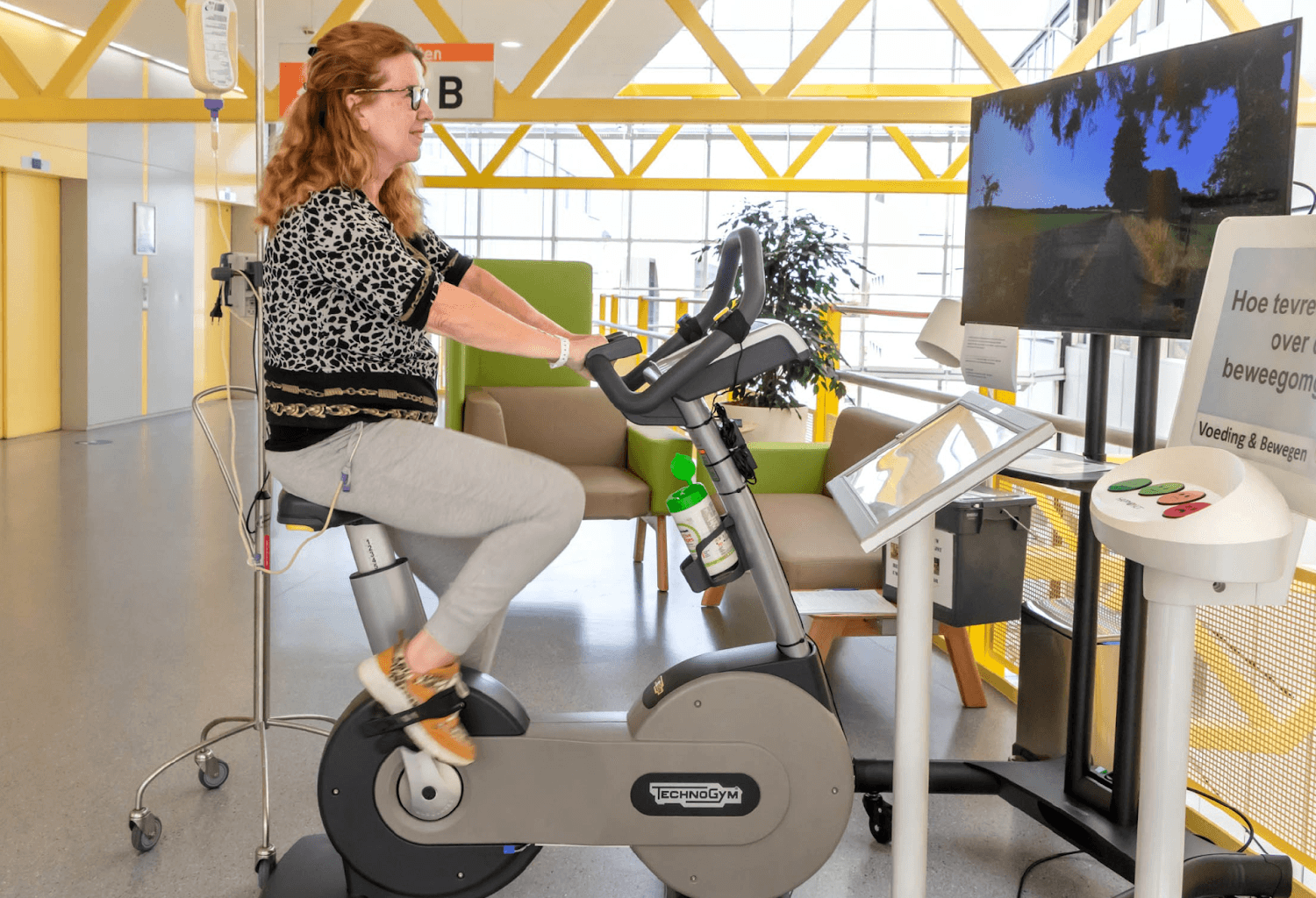
What is a movement-focused hospital?
“Often, patients are already in pajamas and lying in bed even before surgery, even though that’s not always necessary,” Hanneke explains. “This leads to a quick decline in fitness and strength, often resulting in longer hospital stays. A movement-focused hospital aims to get patients moving through various initiatives.” In fact, patients spend over 80% of their time in bed during a hospital stay, often without any medical reason. Movement-focused hospitals aim to limit the negative effects of inactivity so that patients are better able to function when they’re discharged.
Bike Labyrinth as a hospital initiative
One of those movement initiatives at MUMC+ is Bike Labyrinth. Hanneke shares how it was introduced: “We wanted patients to leave their rooms more often, instead of staying in bed all day. A student started researching different ways to encourage this, and Bike Labyrinth came out on top.”
It turned out to be a perfect match. MUMC+ tested Bike Labyrinth during a free trial period. When asked how patients responded, Hanneke says the feedback was overwhelmingly positive. “Surveys showed that patients enjoy escaping the hospital environment for a while. They like being active. Most patients know exercise is good, but there are often limited options to move in the hospital. With Bike Labyrinth, they can also revisit old memories or explore new places. One patient was here for two weeks and used it every day when it was available. After the trial, we submitted a budget proposal to the Board of Directors, and that allowed us to purchase 10 Bike Labyrinth systems.”
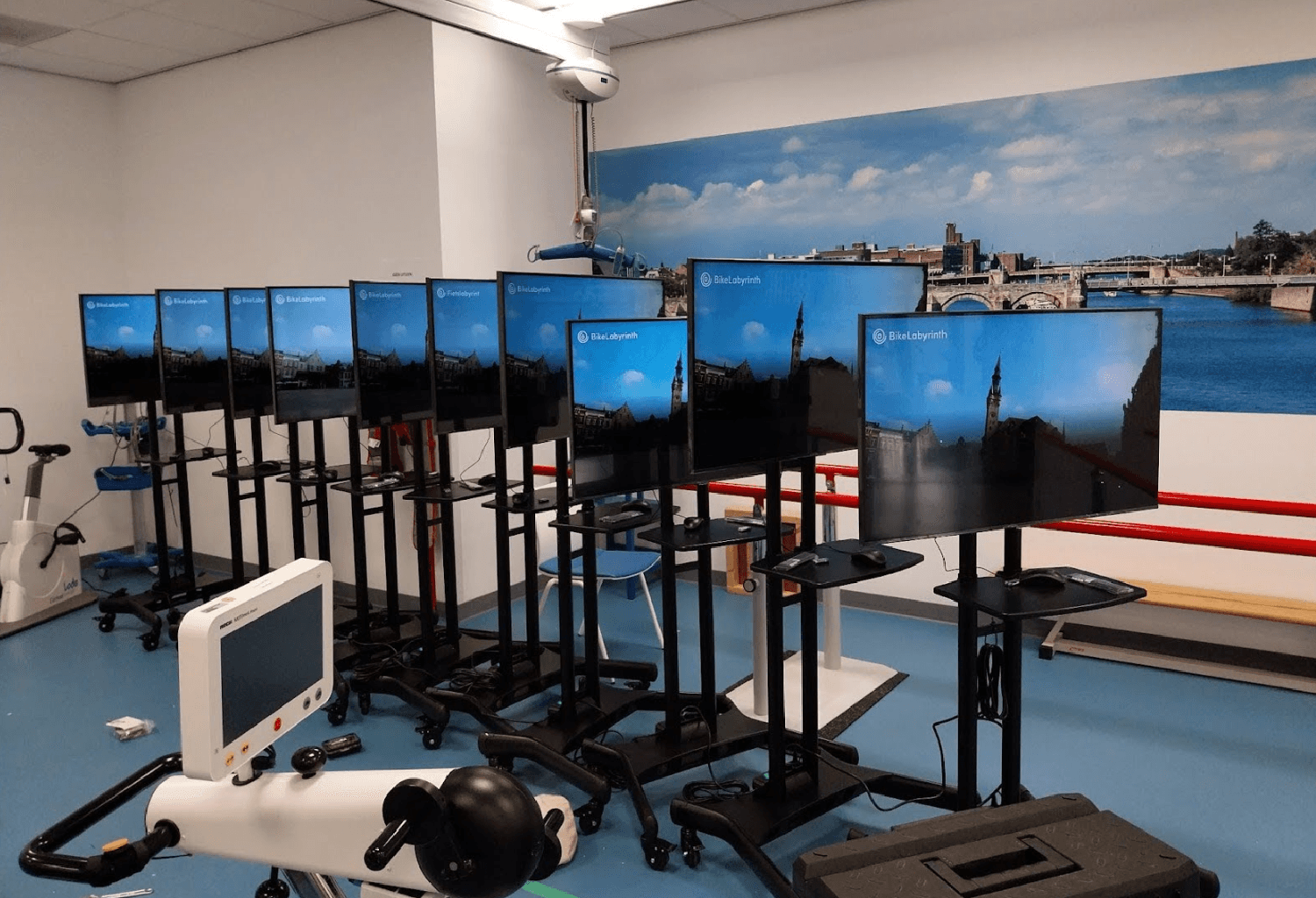
Virtual cycling throughout the hospital
The Bike Labyrinth systems are now used across many departments: from physical therapy to cardiology, oncology, and even intensive care. “I think it could even work well in the children’s ward or outpatient clinics,” Hanneke says. “Of course, it depends on the patient’s condition, but in general, Bike Labyrinth is used throughout the patient journey.”
Staff members are also enthusiastic. “It’s easy to use and doesn’t take much time,” says Hanneke. “Some staff even hop on during night shifts. Bike Labyrinth encourages patients to move, and they genuinely enjoy it. That makes it an easy and low-threshold way to promote physical activity within our hospital.”
So not only did the student succeed in their research project, but MUMC+ also found a fun and effective way to get patients moving.


2516 BE The Hague, NL
info@bikelabyrinth.com
+3170 737 1152